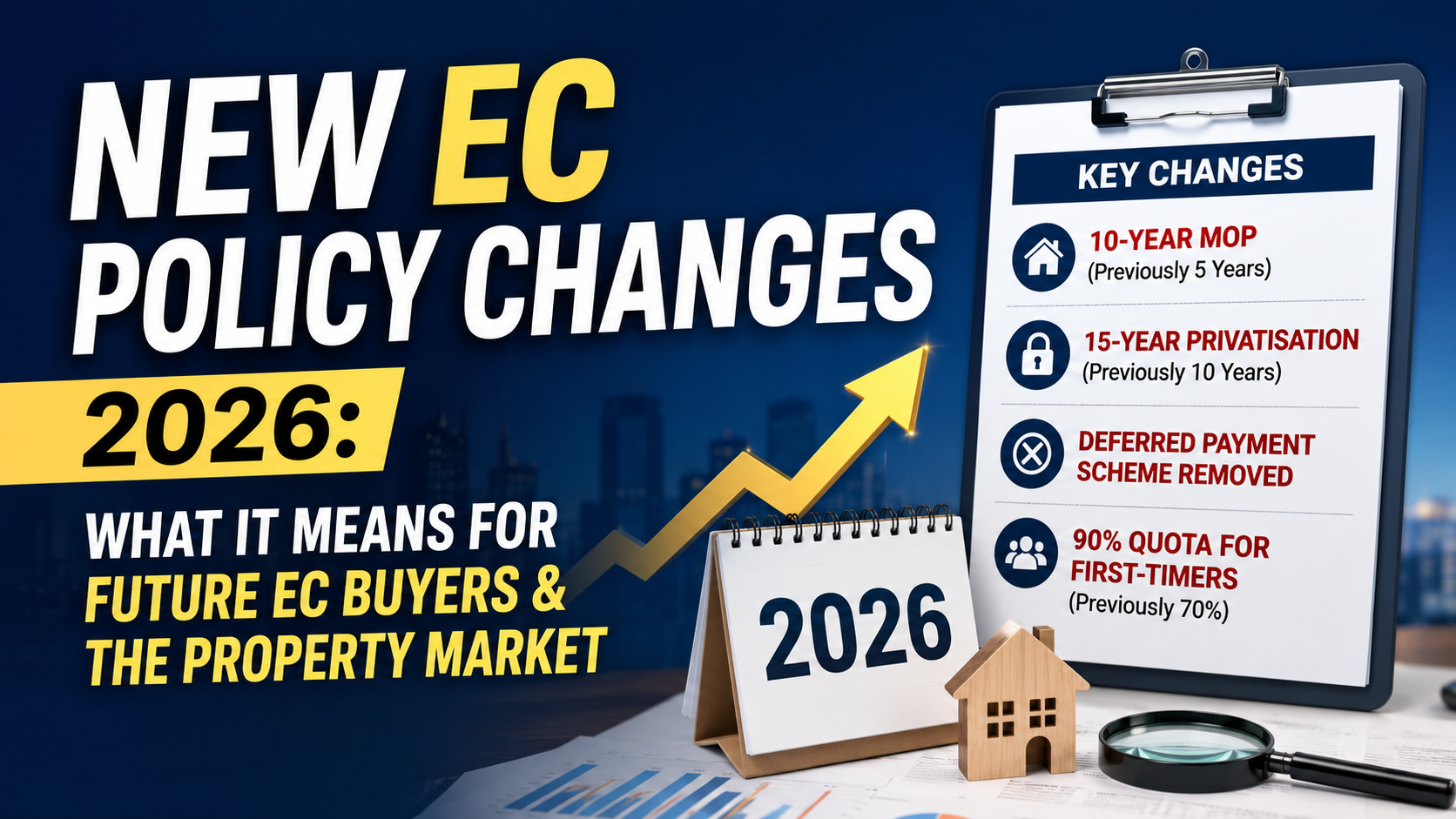
New EC Policy Changes 2026: What It Means For Future EC Buyers & The Property Market.
The Singapore government has officially announced major changes to the Executive Condominium (EC) framework on 8 May 2026, and this could potentially reshape the EC market and even influence the overall property market moving forward.
For many Singaporeans, ECs have always been viewed as one of the most attractive stepping stones for HDB upgraders because they offer a balance between affordability and private property ownership potential. However, with the latest policy revisions, future EC buyers may now face a very different landscape compared to before.
So what exactly changed, and how will it affect buyers moving forward?
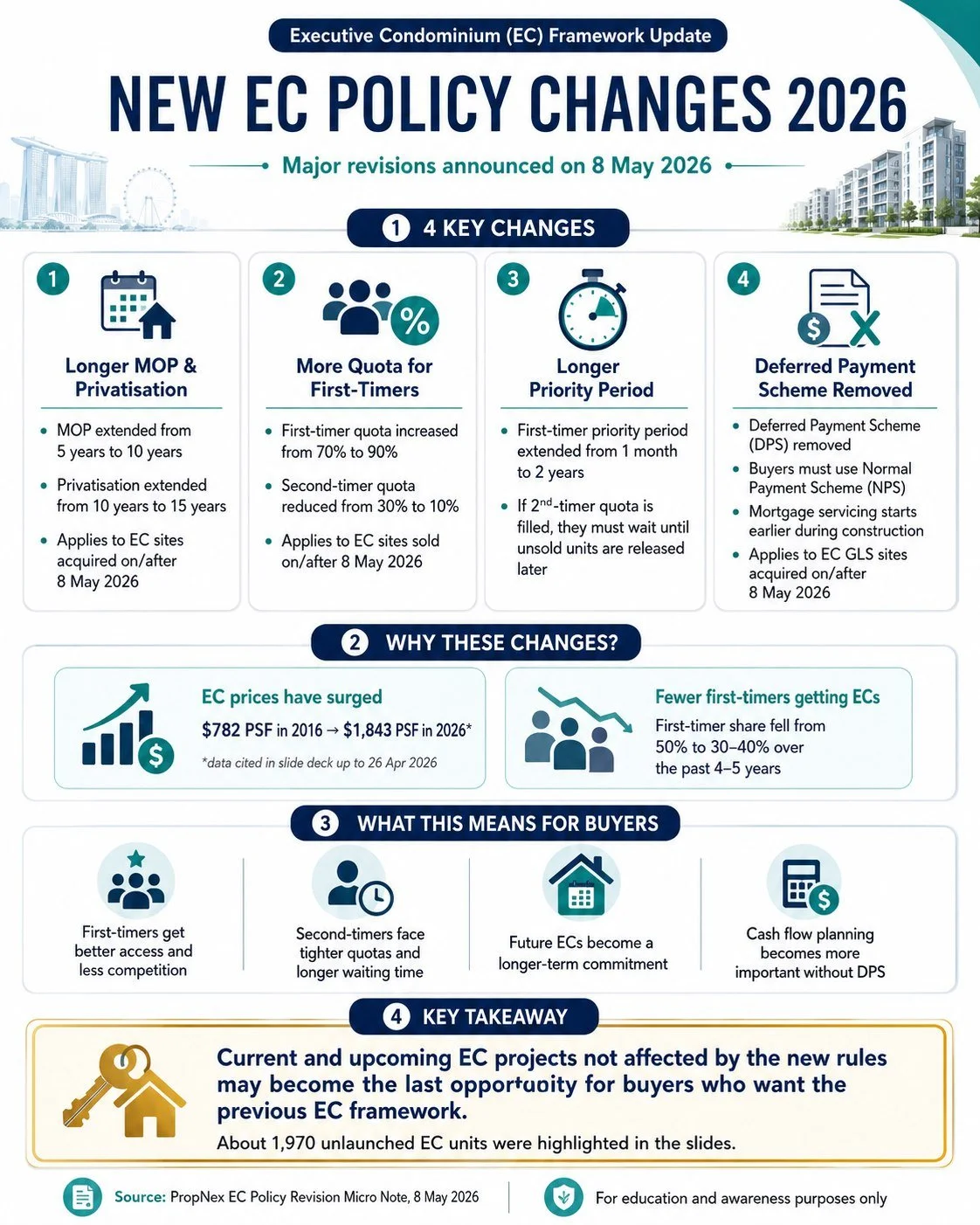
1. Minimum Occupation Period (MOP) Extended From 5 Years To 10 Years
Previously, EC owners only needed to fulfil a 5-year MOP before they could sell their units to Singaporeans and PRs, rent out the whole unit, or invest in another private residential property.
Under the new policy, future ECs launched from land sites acquired on or after 8 May 2026 will now require a 10-year MOP instead.
In addition, the privatisation timeline will also be extended from 10 years to 15 years.
This means EC buyers will now need to hold onto their properties for a much longer period before enjoying the same flexibility and exit options as before.
The intention behind this move is likely to reinforce genuine owner-occupation and reduce speculative purchases.
2. Deferred Payment Scheme (DPS) Removed
One of the biggest changes that may impact many HDB upgraders is the removal of the Deferred Payment Scheme (DPS).
Previously, under DPS, buyers only needed to pay the initial booking and downpayment while the bulk of the home loan would only start after TOP. This gave many HDB upgraders flexibility and reduced the stress of servicing two properties concurrently.
However, moving forward, buyers of future EC projects will need to purchase under the Normal Payment Scheme (NPS), where payments are made progressively during the construction stages.
This means buyers will now need to start servicing mortgage instalments much earlier.
As a result, cash flow planning will become much more important for future EC buyers.
3. More Priority Given To First-Timers
The government has also increased the first-timer quota from 70% to 90% for future EC launches.
At the same time, the second-timer quota has been reduced from 30% to only 10%.
On top of that, the priority period for first-timers has also been extended from just 1 month to 2 years.
This means second-timers who fail to secure a unit during the initial launch may potentially need to wait much longer before unsold units become available again.
Clearly, the government wants ECs to move back towards supporting genuine first-time home buyers.
Why Did The Government Introduce These Changes?
Over the last few years, EC prices have risen significantly.
According to the data shared, median EC launch prices increased from around $782 PSF in 2016 to more than $1,800 PSF in 2026.
At the same time, the proportion of first-time buyers purchasing ECs has also declined over recent years.
The latest measures are likely introduced to improve affordability and ensure ECs remain accessible to genuine first-time buyers.
How Will This Affect The EC Market Moving Forward?
One of the most immediate effects may be increased demand for current and upcoming EC launches that are still operating under the old framework.
Many buyers may now see these projects as potentially the “last opportunity” to enjoy:
5-year MOP
Earlier privatisation timeline
Deferred Payment Scheme
Higher second-timer allocation
This may create stronger urgency and demand for current EC projects that are not affected by the new policies.
At the same time, future EC buyers may start comparing whether purchasing a private condominium could make more sense instead, especially when considering:
Longer holding periods
Removal of DPS
Reduced flexibility
Stricter quotas
This could potentially reshape upgrade pathways for many HDB owners moving forward.
What About The Overall Property Market?
These changes could also indirectly impact the broader property market.
We may potentially see:
Stronger demand for current EC launches
More HDB upgraders exploring resale or private condos
Increased demand for resale ECs that are already fully privatised
Developers becoming more cautious in bidding for future EC land sites
In the longer term, the EC market may become more focused on genuine owner-occupation rather than short-to-medium-term capital appreciation strategies.
Final Thoughts
The latest EC policy changes are not just small adjustments. They may significantly change how buyers plan their upgrade journey and property strategy moving forward.
For buyers who are already considering upgrading to an EC, understanding which projects are still under the previous framework could become extremely important before the new rules fully take effect.
As always, every buyer’s situation is different, and proper planning is key before making any property decision.
If you would like to understand:
Which EC projects are still under the old rules
Whether EC or private condo makes more sense today
Your financing and eligibility options
How these changes may impact your long-term property plans
Feel free to reach out for a discussion.